Fossil Fuelled — Britain Under a Reform Government
It’s been a torrid 15 months for Labour. Less than 18 months after sweeping to…
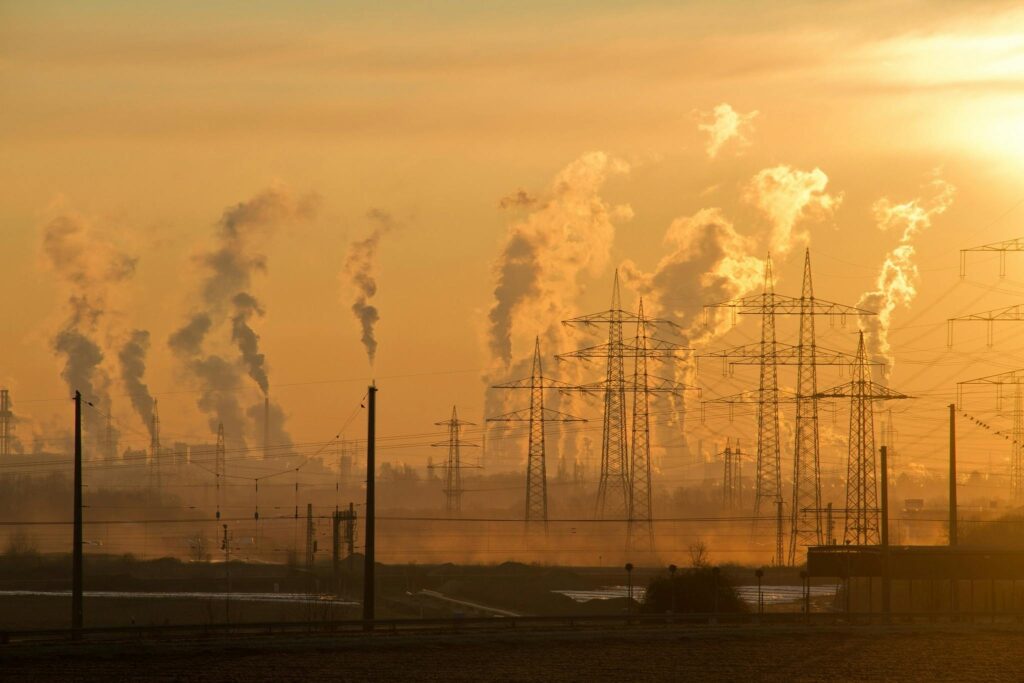
It’s been a torrid 15 months for Labour. Less than 18 months after sweeping to victory with the largest parliamentary majority this century, Keir Starmer went from being the country’s safe, if unspectacular, choice to officially the most unpopular leader in British political history.
That’s quite the achievement for a PM whose party hoovered up more than three-and-a-half times as many seats as their main rivals, the Conservatives. But catastrophic missteps over the winter fuel allowance and other benefits cuts — combined with inaction on Gaza and a worsening migrant crisis — have left people right across the British social and political spectrum feeling thoroughly underwhelmed by this Labour government.
Predictably, this has opened the back door for Reform UK, as Nigel Farage and co. continue to use their tried-and-tested anti-immigration rhetoric to garner public support. Worryingly, all signs suggest the strategy is working, with recent opinion polls all placing Reform well ahead and on course for a landslide victory at the next election.
As we know, things can move at breakneck speed in politics, so it’s worth remembering the next election will, in all likelihood, come no sooner than mid-2029. Trying to predict the political landscape almost four years out is a fool’s errand. Heck, it’s difficult enough guessing what will happen in the next few weeks — just ask Liz Truss!
But if Reform manages to maintain its current appeal, the next time the country heads to the ballot box we may well end up with the most right-wing government in our electoral history.
For many, this is a worrying prospect, particularly for the environmentalists who will have grave concerns about the country’s trajectory if Reform seizes power as the party is backed by fossil fuel companies and has openly declared its disdain for net zero and other green energy initiatives. So with this in mind, what exactly would a Reform government mean for the environment?
Net Zero
It’s safe to say net zero — the idea that the country will get to a stage where our net annual emissions are reduced to nil — has been a politically-charged and hotly contested topic since its inception.
However, despite its polarising nature, successive UK governments have all backed the initiative, starting with the Tories who signed it into UK law on 27 June 2019, through an amendment to the Climate Change Act 2008.
This amendment committed the country to reducing greenhouse gas emissions to net zero by 2050, replacing the previous target of an 80% reduction from 1990 levels. It made the UK the first major economy to make such a legally-binding commitment, demonstrating Britain’s genuine dedication to cutting emissions.
Since then, the Conservatives published their ‘Build Back Greener’ net zero strategy in 2021 which set out policies across sectors to decarbonise and meet interim targets, before Labour went a step further by pushing through their Great British Energy Act. This established a publicly-owned energy company, which aims to accelerate clean, domestic energy production as part of the net zero agenda.
However, Reform’s stance on net zero is markedly different. Not only do they see the initiative as bureaucratic and restrictive, but they also believe the targets are strangling the British economy. It’s therefore no surprise they’ve promised to scrap net zero if they get into office.
Why Are Reform So Opposed to Net Zero?
Reform’s 2024 manifesto declared their intention to bin net zero, believing it would save the public sector £30bn a year. They also claimed that “unlocking Britain’s vast energy treasure of oil and gas” would “slash energy bills.”
Then they reaffirmed their stance in the lead-up to the recent local elections with a key campaign message that said ‘scrap net zero to cut energy bills.’
As Ofgem prepares to raise the energy price cap once again, the timing of this message couldn’t be better for Reform. UK consumers are understandably worried about the price of energy. So any promise to reduce the cost of bills is likely to be welcomed by people who are already struggling to afford to heat their home.
But make no mistake, these policies have nothing to do with reducing the cost of your energy.
Let’s be frank: for every political party, the number one aim is to get into (or remain in) power. Any other stated goal is, at best, exaggerated, and at worst completely disingenuous.
Successful political campaigns don’t come cheap, so if a party wants to achieve its goal of getting into office, it needs to drum up as much financial support as possible, which is where donors come in.
These financial benefactors help fund a party’s candidates and their campaigns, but in the vast majority of cases, a donor’s support isn’t offered out of pure benevolence. They usually want something in return, a sort of ‘you scratch my back and I’ll scratch yours’ situation where donations are rewarded with access to ministers and policies that are favourable to their specific business interests.
One look at where some of Reform’s most generous donations come from, and their anti-environmental stance starts to become clear.
According to an investigation by The New York Times, Reform managed to rake in an impressive £4.75 million during 2024 — around 40% of which was bankrolled by individuals who either publicly question climate science or hold substantial investments in fossil fuels and other polluting industries.
Tellingly, this is by no means a new trend for Reform. Climate watchdog DeSmog reported that between December 2019 and June 2024, the party pocketed more than £2.3 million from oil and gas interests, heavy industry and well-known climate sceptics. To put that into perspective, that figure represented a staggering 92% of their total declared donations over that period.
The New York Times analysis also identified 38 donors who stand to gain financially if Reform follows through with its promise to scrap net zero. Among them is David Lilley, a metals and mining investor who’s handed over £364,000 to the party.
Others who stand to gain from a Reform government are Jeremy Hosking — a one-time Tory benefactor whose trading firm holds over £263 million in fossil fuel investments — and First Corporate Consultants, the company founded by Terence Mordaunt, who also happens to chair the Global Warming Policy Foundation, a group long accused of pushing pro-fossil fuel narratives masquerading as “climate realism”.
Hosking chipped in a cool quarter of a million, while First Corporate Consultants donated £130,000 — support that Reform will be expected to repay if and when they take the reins of power.
Ramifications
So it’s a safe bet that Reform would look to pull us back down the fossil fuel route. But how exactly would they go about doing it?
The first casualties would be Britain’s climate pledges. Net zero would be scrapped, the Climate Change Committee sidelined and the UK’s membership in international green alliances quickly dropped.
Elsewhere, funding for renewable infrastructure — offshore wind, solar expansion, hydrogen trials — would no doubt cease overnight. Subsidies for home insulation and heat pumps, which help homeowners make their homes more energy efficient, would be ditched, as would a large percentage of our investment in public transport and electric vehicle infrastructure.
Instead, the money would be funnelled into fossil fuels under the guise of “energy independence”. Expect to see more fracking, new drilling licences in the North Sea granted, and relaxed planning rules for oil and gas exploration and fresh tax incentives for big energy firms. None of which will benefit either the British public or the environment in any way.
Additionally, Reform would likely dismantle Great British Energy and stick to the disastrous private model that’s seen record numbers of Brits experiencing energy poverty, at the same time energy companies have enjoyed record, multi-billion-pound annual profits. Because rewarding private investors at the expense of the rest of us is precisely why parties like Reform exist.
But is this really what the British public wants? Probably not, although, suffice to say, this isn’t what’s being sold by Reform. Predictably, if we do vote them into power, what we end up getting will be drastically different to what was promised, a la Brexit. And let’s not forget who sold us that lie!
They’ll sell the idea of cheaper energy prices and economic growth, but in the end all we’ll get is sky-high, planet-poisoning emissions, soaring energy bills, insufficient infrastructural investment and damage to our already ailing reputation on the global stage.
And this reputational damage should not be underestimated, as it’s not just the planet that stands to take a pummeling if we decide to scrap our climate commitments. A former industrial powerhouse long past its prime, Britain is already looking increasingly bereft of ideas and direction. Turning our back on the one area where the country had the potential to lead the way looks decidedly shortsighted.
Then there’s the risk of a knock-on effect. As the first major economy to put net zero into law, the UK has been seen as a genuine leader on climate policy. If we suddenly decide it’s all too difficult to stick to these commitments, this may well encourage other less enthusiastic governments to do the same.
All this at a time when we’ve just crossed the first major climate tipping point, with scientists warning that coral reefs are now past their thermal threshold and could vanish entirely unless global heating is reduced to around 1.2°C as fast as possible.
Elsewhere, ice sheets are melting at an alarming rate and extreme weather events from wildfires to floods are becoming the new norm. Abandoning environmental commitments wouldn’t just be reckless, it would come at the worst possible moment for both Britain and the planet.
Domestically, the economic logic doesn’t hold up either. Green industries aren’t simply some fringe experiment, they’re now one of the fastest-growing parts of the UK economy, employing more people than oil and gas combined. Put simply, cutting investment in favour of short-term fossil fuel profits would be an act of economic self-destruction.
When the next election comes around, Britain has a big decision to make. While Labour has made a complete hash of things so far, if we want a future for our country and the world as we know it, the last thing we need is a Reform government intent on taking us back to the dark ages.
This post was written by Darryl Rigby, Content Writer at TradeSparky, a UK-based electrical wholesaler and supplier of solar power panels and batteries.