Denbighshire Achieves Major Milestone to Increase Biodiversity as Native Black Poplar Returns Through Seed Propagation
A species once at risk of disappearing from the British landscape has been successfully revived…
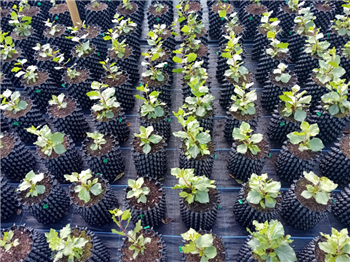
A species once at risk of disappearing from the British landscape has been successfully revived in Denbighshire, marking a major step forward for climate-focused habitat restoration. The native Black Poplar — now one of the UK’s rarest trees — has been grown from seed by Denbighshire County Council’s St Asaph nursery following a multi-year conservation effort. This breakthrough has significant implications to increase biodiversity recovery, improve natural flood defences, ecosystem resilience and long-term climate adaptation strategies across Wales.
For decades, the Black Poplar has struggled due to intense habitat fragmentation, loss of wetland environments and hybridisation with non-native poplar species, making it now an endangered species. Genuine native specimens now survive in only scattered areas. Growing the tree from seed is notoriously difficult and rarely achieved, making Denbighshire’s success a powerful example of targeted climate action delivering measurable results.
The council’s approach involved collecting pollen from the small number of verified native trees, hand-pollinating them under controlled conditions and nurturing the resulting seeds through the germination stage. To prevent accidental hybrid propagation — a widespread problem that undermines national conservation — all seedlings were genetically tested by Forest Research. Only confirmed native Black Poplars were retained for future planting.
Restoring the species is far more than an exercise in botanical preservation. Native Black Poplar trees support a wide range of insects, birds and mammals, and their deep-rooted structures help stabilise waterlogged riverbanks, reducing erosion and supporting natural flood-management schemes. As climate pressures increase, these ecological functions become even more vital for protecting communities and landscapes.
This milestone demonstrates how scientifically grounded, locally led conservation work can contribute meaningfully to climate resilience. Denbighshire’s success highlights the role that councils and communities can play in restoring nature from the ground up — proving that long-term environmental recovery is achievable when expertise, patience and commitment align.
Read the full story here:
https://countyvoice.denbighshire.gov.uk/english/december-2025/latest-news/rare-uk-tree-species-receives-new-lifeline-in-denbighshire