The UK’s one-size-fits-all solar solution isn’t working and here’s why…
By Jonathan Rowles, founder of Dragon’s Breath Solar Solar is a versatile, cost-effective, and sustainable…
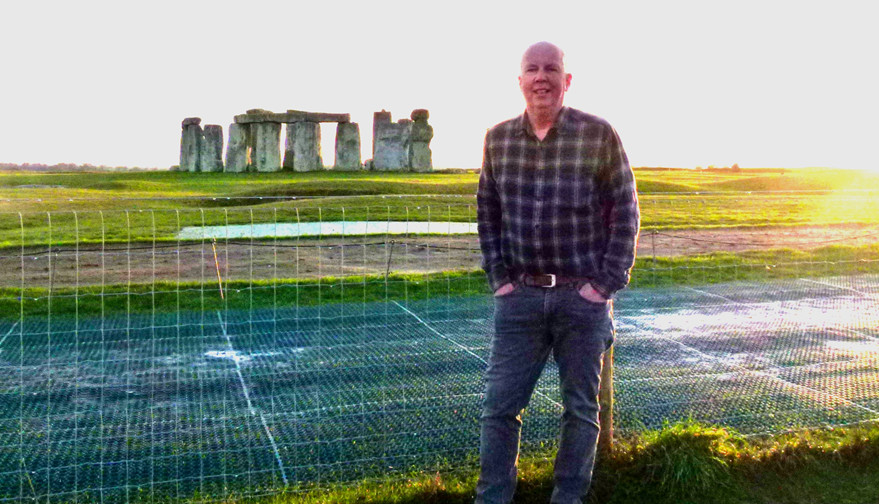
By Jonathan Rowles, founder of Dragon’s Breath Solar
Solar is a versatile, cost-effective, and sustainable source of energy, but in the UK, it won’t deliver good results if it continues to be applied as a one-size-fits-all solution. Why? Because solar isn’t a standard product.
It can’t be installed the same way in every location and deliver the same outcome because its performance depends on where it is, how it’s configured, and what it’s expected to do, yet most of the solar-powered systems currently being installed in Great Britain don’t reflect that.
Too many systems are specified around convenience and cost, rather than performance, and as a result, while they appear to work on paper, the results could be disappointing.
Solar behaves differently depending on where you are
The performance of a solar panel depends on its location. In the south of England, a 100-watt panel will produce a different face value in mid-summer, than further north to say Edinburgh, that output could reduce to less than half.
This isn’t a limitation of the technology; it’s simply how solar energy behaves in different geographical conditions.
The difficulty is that many systems are still designed as though those differences don’t exist. Panels are rated under ideal conditions, not UK conditions, which means there’s a gap between expectation and performance.
Designing for the wrong conditions
Many solar lighting systems are, in effect, designed around summer performance. In favourable conditions, even a poorly specified system can generate sufficient energy in mid-summer. That can give the impression that the system is working as it should, but the real test, however, comes in the winter. During the winter months, the sun is lower in the sky, daylight hours are reduced, and the available energy can be significantly lower. At the same time in winter, lighting is required for longer periods. If a system hasn’t been designed with those conditions in mind, it will not deliver consistent performance.
This is where many installations fall short. They are configured to operate when conditions are at their best, rather than at their most demanding.
Angle is as important as capacity
Solar performance is not determined by panel size alone – the position of the panel is equally important. The angle of the sun changes significantly throughout the year. In summer, it is high, while in winter it sits much lower, closer to the horizon.
If a panel is fixed at an angle that suits summer conditions, it will not capture enough energy during the winter months. To achieve consistent performance, panels need to be aligned to the sun’s position at a given location, across the year, not simply fixed in place.
In practical terms, that means systems should allow for adjustment, so that panels can be positioned correctly rather than locked into a single angle that only works part of the time. Our solution to this at Dragon’s Breath Solar is multi-directional solar-powered lighting units. They are mechanically mounted onto a pre-determined size of column/lamppost and can be positioned easily with the solar panels pointing correctly towards the sun’s horizon.
One size does not fit all
There is a tendency to approach solar lighting as a uniform solution when it’s dependent on context.
A system that performs effectively in Southampton will not behave in the same way in Edinburgh. In some cases, the panel needs to be twice the size to achieve comparable output. In more northern locations, it may need to be larger again.
That is not inefficiency; it’s a reflection of how solar energy behaves in different environments.
I’ve got spreadsheets that tell me what the sun produces in different locations. I recorded the data myself so that I can size solar panels properly.
Hybrid lighting
At Dragon’s Breath, we’ve also designed an AC/DC streetlight that runs on solar and can also take power from the mains, so there is always backup if the sun’s rays aren’t enough. This type of light is ideal for locations where winter performance is unpredictable and in sites where you cannot afford failure, such as safety-critical environments. It’s about ensuring performance first, with solar doing as much of the work as possible.
When solar is done properly, the benefits are clear
When solar lighting is correctly specified, it can deliver both environmental and practical benefits.
A single solar streetlight can save around a quarter of a tonne of CO2 per year, so over the lifetime of the equipment, that’s a huge reduction in carbon emissions. Solar lights cost nothing to run and rarely need maintenance. At Dragon’s Breath, our streetlights have a five-year warranty, but it’s usual for them to go for 10 years or more with minimal maintenance.
There are also clear installation advantages. Solar systems don’t require trenching or cabling, which reduces both cost and disruption. These are tangible benefits, but they depend on how the system is designed.
A more considered approach is needed
At present, too many solar installations are driven by a one-size-fits-all mindset. Systems are treated as standard products when they require careful design and specification.
Solar doesn’t need to be complex, but it does need to be considered. It must be designed around location, seasonal variation, and actual usage requirements.
When that’s done properly, solar works reliably and consistently, but when it isn’t, it won’t reach its full potential, and that’s why the current one-size-fits-all approach isn’t working.
For more information on solar lighting energy products and uninterruptible power supply solutions for renewable energy applications, visit Dragon’s Breath Solar.