Renewable Energy Will Be Critical to AI’s Future, Says aream Group Chairman
DÜSSELDORF, Germany – The rapid expansion of artificial intelligence will require significant investment in renewable…
DÜSSELDORF, Germany – The rapid expansion of artificial intelligence will require significant investment in renewable energy and electricity infrastructure if future demand is to be met, according to the Executive Chairman of German renewable infrastructure specialist aream Group.
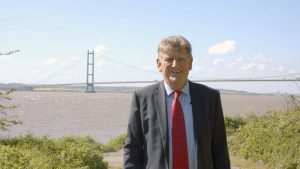
Markus Voigt believes the continued growth of AI will place increasing pressure on electricity networks as data centres and advanced AI models consume more power. His comments follow growing industry discussion around the energy requirements of AI technologies and the role renewable energy could play in supporting their expansion.
Industry forecasts suggest the global AI market could grow substantially over the next decade, while organisations continue investing heavily in AI technologies. Separately, the International Energy Agency (IEA) has forecast that electricity demand from data centres is likely to increase significantly by 2030, driven by artificial intelligence, cloud computing and wider digitalisation.
Commenting on these trends, Voigt said:
“Renewable energies therefore play a key role in the widespread adoption of this technology of the future.”
Voigt argued that expanding renewable generation should be viewed as an important part of supporting future AI development while helping countries pursue climate goals.
“Against this backdrop, the accelerated expansion of renewable energy is becoming a key prerequisite for sustainable AI growth. To ensure competitiveness in the AI era whilst meeting climate targets, investment in renewable energy, grid infrastructure and storage technologies must be consistently expanded.”
While many analysts agree that AI will increase electricity demand, there is ongoing debate over how that demand will ultimately be met. Technology companies are increasingly signing long-term Power Purchase Agreements (PPAs) for renewable electricity, while governments in many countries are investing in electricity grids, battery storage and new generation capacity to support rising demand.
aream reports mixed performance across European renewable assets
Alongside its commentary on AI and energy, aream Group released an operational update covering its renewable energy portfolio.
The company said its German solar assets experienced lower-than-expected generation during June after electricity grid curtailments reduced output. It expects compensation for approximately 1,300 MWh of curtailed electricity, while additional generation losses resulted from grid outages and inverter faults during periods of high temperatures. Taking expected compensation into account, aream said the portfolio achieved approximately 97% of its planned output.
Its Spanish solar assets achieved around 67% of target generation, with grid curtailments accounting for much of the shortfall. Around 1,850 MWh of curtailed electricity is expected to be reimbursed. Italian solar operations performed close to expectations, achieving approximately 99% of planned output.
The company’s wind portfolio reached around 88% of its monthly target after generation was affected by curtailments, equipment faults and planned grid maintenance.
Founded in 2005, aream Group SE develops and manages renewable energy infrastructure across wind, solar, battery storage and electricity networks. The company says it has managed transactions exceeding €2.5 billion and has generated more than 4 billion kWh of renewable electricity since 2008.
Sources
- International Energy Agency – Energy and AI: https://www.iea.org/reports/energy-and-ai
- UN Trade and Development (UNCTAD): https://unctad.org
- aream Group: https://www.aream.de