Swiss-Italy Border Redrawn by Melting Glaciers
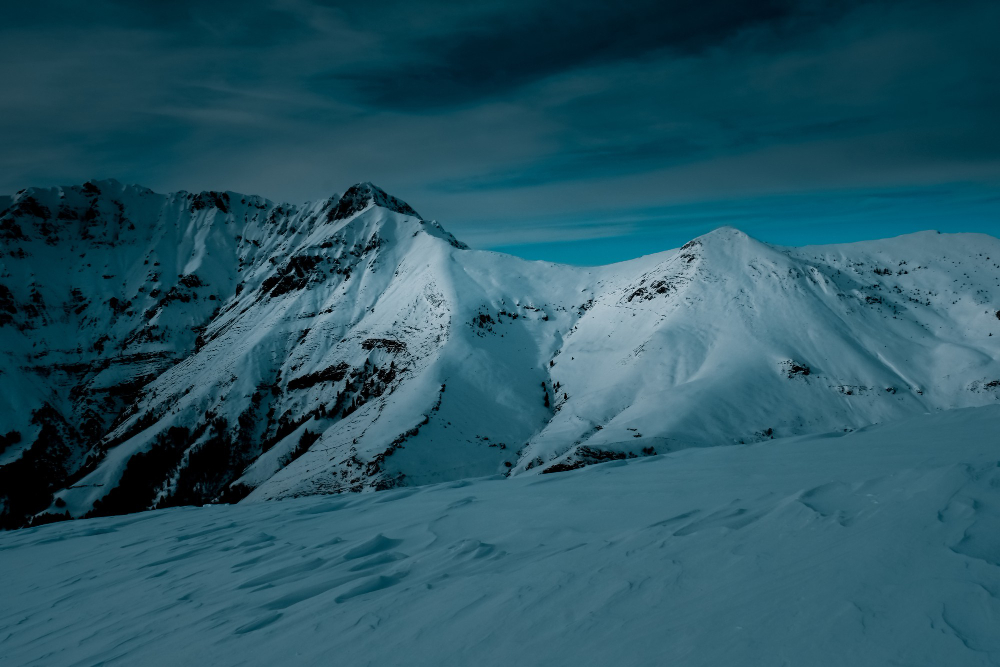
One of the most visible and surprising effects of climate change on borders is occurring in the Alps. For centuries, the boundary between Switzerland and Italy has been largely defined by the shifting glaciers that straddle the two countries. As global temperatures rise, glaciers such as the Theodul Glacier near the Matterhorn are shrinking, revealing previously buried terrain. This has led to adjustments in the precise location of the border between Switzerland and Italy.
In 2021, the movement of the Theodul Glacier forced Swiss and Italian officials to negotiate changes to their border. While this process has been largely amicable, it highlights a growing trend where climate change is causing the redefinition of territorial lines that have remained largely unchanged for centuries. The melting glaciers are uncovering land previously thought to be within one country’s borders, requiring officials to reassess and redraw maps based on new topographical data.
The Disappearing Coastlines: Global Risks
Elsewhere in the world, rising sea levels are swallowing coastal regions, especially in low-lying nations and island states. The Maldives, Bangladesh, and Pacific islands are grappling with the prospect of losing entire stretches of land. In the United States, Louisiana and Florida are witnessing coastal erosion that is forcing communities to relocate inland.
Some countries are already planning for the worst-case scenarios. The Maldives, which risks disappearing beneath rising waters, has begun exploring the possibility of purchasing land in other countries to relocate its population. These land losses are expected to trigger legal questions about sovereignty, citizenship, and climate refugees, as nations begin to disappear under water.
Resource Disputes Escalate Over Water and Territory
Water scarcity and changing rainfall patterns are driving conflict in regions where shared water resources cross national boundaries. In South Asia, the Indus River, critical to both India and Pakistan, is becoming a flashpoint for future tensions, as unpredictable flow from glaciers complicates agreements.
The Arctic is another key example of how climate change is shifting geopolitical realities. With sea ice rapidly melting, countries bordering the Arctic Ocean—Russia, Canada, the United States, and Norway—are racing to assert claims over newly accessible resources and shipping routes. The thaw is turning the once-inaccessible region into a hotbed of strategic competition, as nations seek to extend their exclusive economic zones.
Internal Displacement: The Urbanization Challenge
In Africa’s Sahel region, expanding deserts are pushing millions of people toward already-crowded urban centers. The internal displacement caused by desertification is not only altering demographic patterns but also straining infrastructure and resources in cities, further complicating efforts to maintain social and economic stability. Rural areas, once fertile, are being abandoned, creating vast stretches of uninhabited land while megacities emerge, often without the infrastructure to support rapid growth.
South America faces similar issues, as deforestation and shifting weather patterns threaten agricultural regions. In the Amazon, droughts and forest fires, exacerbated by climate change, are altering the landscape and endangering indigenous territories. The conflict between conservation efforts, industrial interests, and local populations is likely to intensify as the environment continues to change.
Redrawing National and International Boundaries
Many countries are already adapting their borders in response to environmental changes. The Netherlands, with its long history of battling rising seas, has invested heavily in flood defenses and adaptive infrastructure. Australia is seeing a shift of its population toward coastal regions as the interior becomes increasingly uninhabitable due to rising temperatures and drought.
International maritime boundaries are also under threat, especially in regions where exclusive economic zones (EEZs) are critical for fishing and resource rights. In the Pacific, where the majority of EEZs are tied to coastlines, rising sea levels are threatening to shift these zones and trigger new diplomatic negotiations.
Swiss-Italy Border: A Case of Climate Cooperation
While many of the changes induced by climate change are fraught with tension, the case of Switzerland and Italy offers a model of peaceful adaptation. As glaciers in the Alps recede, the two countries have worked together to adjust their shared border. This adjustment has primarily affected the area around the Matterhorn, a region where the border was once defined by glacial ice.
Both Switzerland and Italy have approached the changes diplomatically, using satellite data and geographic surveys to ensure the border reflects the new landscape. Though small in scale compared to other global boundary shifts, this peaceful adaptation offers an example of how countries can cooperate to manage the effects of climate change on their territories.
A Call for Global Action
The shifting of boundaries due to climate change requires global cooperation. While treaties such as the Paris Agreement focus on reducing emissions, there is a growing need for international frameworks that address the legal, economic, and humanitarian issues associated with boundary changes. As countries adapt to new realities, the importance of shared governance, fair resource distribution, and human rights will become central to managing the planet’s new geography.
As the example of Switzerland and Italy shows, it is possible for countries to work together to manage these changes. However, with rising sea levels, resource disputes, and large-scale human displacement, the world must act quickly to ensure that the shifting map doesn’t lead to new conflicts.
References:
- “Climate Change is Redrawing the Italian-Swiss Border.” BBC, August 30, 2022.
- “Rising Sea Levels Are Wiping Countries Off the Map.” National Geographic, September 2023.
- “The Melting Matterhorn: How Climate Change is Affecting Switzerland.” The Guardian, April 2023.
- AI was used to assist research with this article