Scottish Scientists Pioneer Breakthrough Method to Unlock Secrets of Wildfires Past and Present
A team of scientists in Scotland has developed a groundbreaking technique to analyse the intensity…
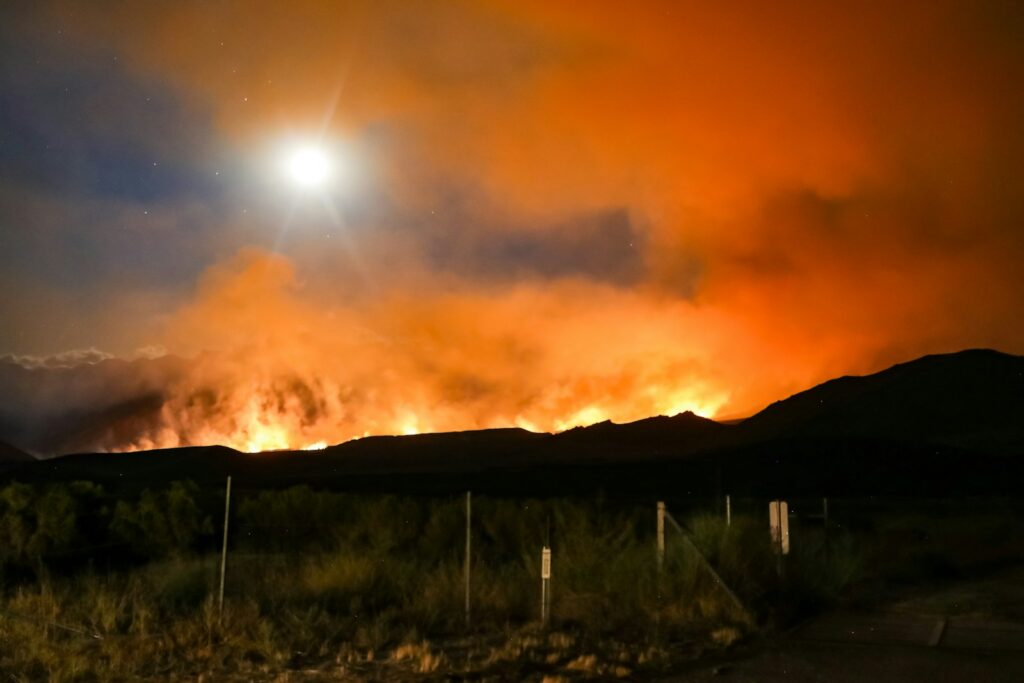
A team of scientists in Scotland has developed a groundbreaking technique to analyse the intensity and behaviour of wildfires, both ancient and modern, offering new insights into how these destructive forces have shaped—and continue to shape—our planet. The research, led by the University of Aberdeen in collaboration with the University of Edinburgh, could prove crucial in understanding the role of wildfires during periods of climate change, both in the distant past and today.
Published in the prestigious journal Scientific Reports, the study introduces a novel method to measure the energy released by wildfires using charcoal remains. This technique, which employs advanced laser analysis known as Raman spectroscopy, can be applied to wildfires of any age—from those burning today to the earliest evidence of fire on Earth, dating back 420 million years.
The interdisciplinary team, including geoscientists Dr. Thomas Theurer, Dr. Dmitri Mauquoy, Professor David Muirhead, Dr. Clemens von Scheffer, and Daniel Coathup from the University of Aberdeen, alongside fire engineers Professor Rory Hadden, Dr. Zakary Campbell-Lochrie, and Sergio Vargas Córdoba from the University of Edinburgh, conducted experiments at the Rushbrook Fire Laboratory in Edinburgh. There, they simulated wildfires and analysed the resulting charcoal to develop their method.
A New Lens on Ancient Fires
Wildfires have been a constant presence throughout Earth’s history, including during periods of extreme climate change. However, understanding their intensity and impact has been challenging. Traditional methods of estimating ancient fire temperatures, known as geothermometry, rely on specific changes in charcoal chemistry caused by heat. But these methods have limitations, as they do not account for the complex energy release and transfer processes that occur during wildfires.
The new technique developed by the Scottish team overcomes these limitations. By quantifying the energy release from wildfires using charcoal remains, it provides a more accurate and universal way to study fire behaviour across different environments and time periods.
“This is the first method of its kind that allows us to measure wildfire energy release from charcoal chemistry,” explained Dr. Thomas Theurer, a research fellow at the University of Aberdeen. “It can be applied to any wildfire, whether it happened yesterday or millions of years ago.”
Implications for Climate Change and Ecosystems
The research comes at a critical time, as wildfires are becoming more frequent and intense due to climate change. Recent devastating fires, such as those in California that destroyed over 18,000 structures, highlight the growing threat. Wetland ecosystems, which store vast amounts of carbon and play a vital role in mitigating climate change, are particularly vulnerable to wildfires.
The study also sheds light on so-called “zombie fires,” which smoulder in peatlands and release up to 100 times more carbon than typical wildfires. Understanding these fires, both past and present, could help scientists predict future wildfire behaviour and its impact on global ecosystems.
“By applying this method, we can gain insights into how fire activity has changed with climate change, independent of human interference,” said Professor Rory Hadden, Personal Chair of Fire Science at the University of Edinburgh. “This allows us to better assess and contextualize predictions of future fire activity and its potential impact on ecosystems and populations.”
Beyond Wildfires: Broader Applications
The implications of this research extend beyond wildfires. Charcoal, a common byproduct of fire, is found in archaeological sites, forensic investigations, and fire safety studies. The team believes their method could revolutionize these fields as well.
“It’s exciting to think about how this technique could be applied to other areas, such as archaeology or forensic fire investigations,” said Dr. Dmitri Mauquoy, Senior Lecturer in Geosciences at the University of Aberdeen. “This method is non-destructive and universal, making it a powerful tool for understanding fire in all its forms.”
As wildfires continue to pose a global threat, this breakthrough offers hope for better understanding and managing their impact—both in the past and in the face of an uncertain climate future.
—
Photo by Ross Stone, Unsplash