Gotta Get Them Bugs: Black Soldier Fly Larvae as a Sustainable Alternative to Palm Oil
A new paper suggests that Black Soldier Fly Larvae could provide a sustainable alternative to…
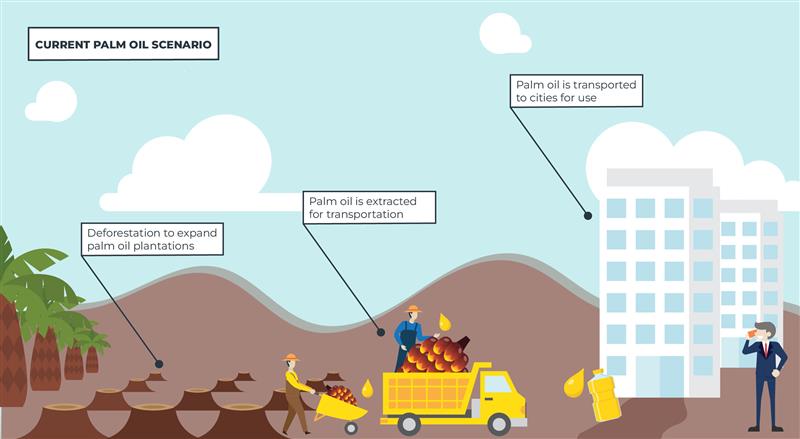
A new paper suggests that Black Soldier Fly Larvae could provide a sustainable alternative to palm oil.
Authored by Dr Gareth Davies, Senior Scientist, Tunley Environmental and Dr Tara Garraty, Biodiversity Specialist & Sustainability Scientist, Tunley Environmental, we share their research below
Abstract
Black soldier fly larvae (BSFL) offer a promising sustainable alternative to palm oil, potentially mitigating the significant biodiversity loss caused by palm oil production. This study explores the technological feasibility and biodiversity impact of replacing palm oil with BSFL oil, while acknowledging the complex social and economic realities of palm oil agriculture.
Introduction
Palm oil production is a major driver of biodiversity loss, primarily due to widespread deforestation and habitat destruction in tropical regions. The conversion of biodiverse forests to oil palm plantations has led to the decline of numerous species, including Orangutans and Sumatran Tigers. Since the 1960s, palm oil cultivation has expanded rapidly, with global land use quadrupling from 3.6 million hectares in 1961 to 13.9 million hectares by 2007.
The impact of palm oil on biodiversity extends beyond habitat loss. Forest fragmentation isolates species and disrupts ecological processes crucial for survival. Monoculture plantations result in lower species richness and altered community composition. Additionally, the use of agrochemicals in palm oil production pollutes nearby ecosystems, affecting aquatic species and habitats.
Despite palm oil’s high productivity and low cost compared to alternative vegetable oils, its environmental impact necessitates the exploration of sustainable alternatives. This is where black soldier fly larvae (BSFL) enter the picture as a potential game-changer.
BSFL: Nature’s Waste Converters
Black soldier flies (Hermetia illucens) are non-pest insects whose larvae can digest a wide range of organic waste streams. These voracious eaters build up lipid reserves during their larval stage, which can be harvested and processed into valuable products, including oil, protein, and chitin.
The life cycle of BSFL is relatively short and efficient:
- Feeding stage: 18-36 days
- Pupation: ~7 days
- Adult emergence
This rapid cycle allows for efficient production and harvesting of BSFL oil, addressing both waste management and sustainable oil production challenges.
Chemical Composition: BSFL Oil vs. Palm Oil
Both BSFL and palm oil primarily consist of triglycerides esterified with long-chain fatty acids. However, there are some key differences:
- Palm oil: >95% triglycerides, with high levels of palmitic and oleic acids
- BSFL oil: ~80% triglycerides, with a higher proportion of shorter-chain fatty acids like lauric acid
The fatty acid profile of BSFL oil makes it suitable for various applications, including personal care products. Proper refining is crucial to address potential issues with odour and appearance.
Land Use Efficiency and Environmental Impact
A theoretical scenario of replacing palm oil with BSFL oil reveals significant potential benefits:
- Land use efficiency:
- Palm oil: 11.7 kg oil/m²/year
- BSFL oil (single-level facility): 18.4 kg oil/m²/year
- BSFL oil (15-story vertical farm): 275.9 kg oil/m²/year
- Land requirements:
- Current palm oil production: 4.25 million acres
- Equivalent BSFL oil production: 0.189 million acres (15-story vertical farms)
- Environmental benefits:
- Potential reforestation of 4.25 million acres
- Increased biodiversity and species abundance
- Carbon sequestration: Estimated 420 million t CO2e over 50 years
Vertical farming of BSFL offers several advantages:
- No sunlight requirement, allowing for traditional tower block construction
- Efficient use of space in urban or industrial areas
- Minimal impact on natural habitats
Challenges and Considerations
While BSFL oil presents a promising alternative to palm oil, several challenges must be addressed:
- Technical challenges:
- Ensuring consistent organic matter input
- Maintaining genetic diversity in BSFL colonies
- Optimizing oil extraction and purification processes
- Social and economic factors:
- Addressing the economic impact on palm oil-producing communities
- Overcoming potential consumer resistance to insect-derived products
- Developing infrastructure for large-scale BSFL farming and processing
- Regulatory considerations:
- Ensuring food safety and quality standards for BSFL oil
- Establishing guidelines for BSFL farming and processing
Conclusions
The potential of BSFL oil to replace palm oil represents a significant opportunity to address both waste management and sustainable oil production challenges. With its superior land use efficiency and minimal environmental impact, BSFL farming could contribute to the restoration of biodiversity-rich tropical ecosystems.
While the idea of insect-derived oil in everyday products may initially seem off-putting, it’s crucial to evaluate all potential solutions in our quest for sustainability. BSFL oil offers a realistic path to converting organic waste into high-value products while significantly reducing the environmental footprint of oil production.
As we move forward, it’s essential to address the technical, social, and economic challenges associated with transitioning from palm oil to BSFL oil (and all other developing technologies). By doing so, we can work towards a more sustainable global economy that prioritizes biodiversity conservation and responsible resource management.
The journey from palm plantations to vertical insect farms may not be straightforward, but it represents an innovative approach to tackling one of our most pressing environmental challenges. As we continue to explore and refine this technology, BSFL farming has the potential to revolutionize our approach to oil production and waste management, paving the way for a more sustainable future.
References
A list of references can be found in the full white paper here: https://hubs.ly/Q02-x2SN0