Why Businesses Must Lead the Renewable Energy Transition – Charles Perry Explains
Charles Perry is one of the UK’s foremost voices on corporate sustainability and renewable energy…
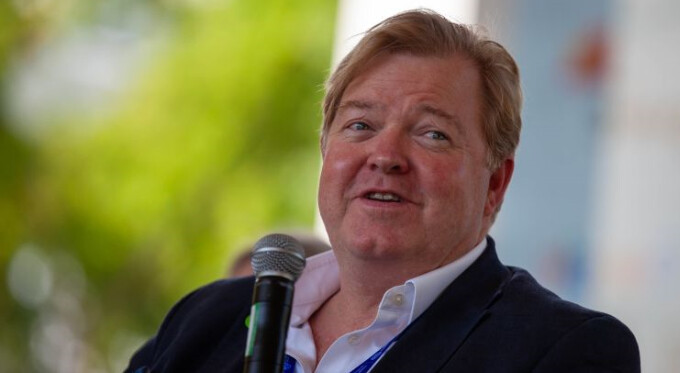
Charles Perry is one of the UK’s foremost voices on corporate sustainability and renewable energy innovation. A former member of the BP rebranding team behind “Beyond Petroleum” and co-founder of SecondNature, Charles has spent over two decades helping major companies—from Tesco to Unilever—embed sustainability into their core strategies.
With a background in renewable energy, circular economy models, and ESG transformation, he brings both boardroom insight and environmental vision.
In this exclusive interview with The Motivational Speakers Agency, he outlines the economic value of green energy, the path to post-fossil fuel business models, and why authentic leadership is key to addressing the climate crisis.
Q: In what ways does embedding sustainability into business operations create long-term commercial and environmental value?
Charles Perry: Well, first of all, sustainability is a value system whereby the whole culture becomes driven by doing the right thing in financial, social and environmental terms. So across all three, it’s embedding sustainability to become a force for good. And as a result of the business really embedding that culturally, it becomes much more purpose-driven, it becomes a more admired business, it gets a brand reputational uplift in terms of intangible value.
And then most importantly, I think sustainability goes directly to the bottom line. I’m a specialist in making the business case for sustainability and proving it in a lot of different client sectors. If you take retail, for example, it was quite easy with Tesco, our largest client for seven years, to deliver bottom line savings almost immediately from sustainability initiatives.
Take one example: putting sliding doors on refrigerators in the stores. That brought down the energy bill dramatically and cut energy use in the stores by over 25%.
Q: What is the strategic role of renewable energy in accelerating the global transition to a sustainable, post-fossil fuel economy?
Charles Perry: A huge role. I mean, renewable energy is so exciting because it’s infinitely provided by nature by definition, and that’s free at the point of source.
So whether it’s from the wind or the waves or the tides, or from water more generally… it’s the sun. It’s infinitely renewed by nature for free—for human use.
So this means that if we can harness it, we can have infinite, super, super abundant energy, which will actually really create huge economic opportunities, given how difficult it has become to find the last drops of oil and gas, and how polluting oil and gas is when it’s used so extensively by over 8 billion people globally.
So in the move beyond fossil fuels—we used to say “Beyond Petroleum” at BP—I was part of the team that rebranded BP to Beyond Petroleum and then tried to move an oil and gas company to a green energy company. These things are not easy though, and there’s lots of pressures to obstruct and prevent—both internally and externally—this change that is so badly needed.
But the opportunities are endless with renewables. I mentioned the harnessing and the storage—that’s key. And the costs of the renewables themselves have come down. When I mean the renewables, I mean the technologies to harness those nature-provided energy sources.
They’ve come down dramatically—like solar panels or wind turbines. Now even batteries are coming down dramatically in price year on year. And so that’s exciting. Because when you’ve got renewables plus storage, and they’re more affordable than the competitor fossil fuels, then of course you reach a tipping point.
And everybody moves over because of the reduction on energy bills from the green energy. There’s a misconception that green energy increases bills, but that is—that’s a perversity. In fact, it’s the opposite, because solar and wind are the cheapest forms of electricity right now in most countries around the world.
But it’s all about how you feed that power onto the grid and how you use that. And the grid is where the costs go through the roof.
So the real goal is to form the internet of energy age by competing with a wasteful grid and actually supplying what’s called “behind the meter” to communities and businesses—that you can actually bypass potentially the national infrastructure and use local generation, produced locally.
You can include local residents in being prosumers and producing that renewable energy—for example, solar panels on their homes or wind turbines on a business manufacturing site.
And as long as you find ways to store that locally, then you can use it locally and get all the efficiencies that go with that.
So yes, we’re moving to a post-fossil fuel, clean energy world. And hydrogen, incidentally, is a big part of that storage solution as well.
Hydrogen is the most abundant gas that we have. It’s clean and it can be extracted from all sorts of sources—for example, water. So we just need to use renewable technologies like solar and wind to extract that H2 from water, and we’ve got abundant clean gas there.
And that’s non-polluting—unlike natural gas.
Q: How can corporate leaders drive authentic climate action and integrate circular thinking to combat environmental challenges effectively?
Charles Perry: It’s all about making it authentic for that business and that culture. That means it’s got to be about the leadership to start off with and, you know, whether that leadership comes to it from an awakening from outside of their organisation or from junior people in the organisation.
The point is that that awakening at leadership level starts to mean that the business does things differently. It’s described as an “aha” moment, and there have been lots of these in well-known companies, like Stuart Rose at Marks & Spencer in 2007, after he watched the film An Inconvenient Truth by Vice President Al Gore. And he describes it himself as an “aha” moment. He suddenly realised, “OK, we’ve got to do things differently.” So out of that was born Plan A—because there’s no Plan B.
Plan A has become synonymous with Marks & Spencer and their quest for delivering solutions on the pillars of sustainability.
Unilever: a similar example, driven by Paul Polman. He also had an awakening—I think that was more driven from internally, discussions internally and experiences that he had rising up the ranks at Unilever.
Then his leadership team came up with the Sustainable Living Plan—you know, a strategy to really double growth and halve footprint and show that you can decouple growth from footprint. So growth doesn’t need to come from more polluting activities. It can be quite the opposite—driving efficiencies.
So I think it starts with leadership and then developing a narrative, which then becomes a strategy. It becomes very clear in terms of targets that are set. The culture becomes motivated around those targets.
And then you’ve got to deliver those—called operationalising sustainability or making it second nature. In our case, we co-founded a business called Second Nature to do exactly that for our corporate clients.
And it’s about initially proving that strategy in certain examples within the corporate. And then that catches on pretty fast, because as soon as people see the results of the sustainability initiatives—that they either increase top line by attracting new customers and increasing customer loyalty, or they go straight to the middle cost line and reduce costs through efficiencies…
Taking out waste: waste costs money. Another example at Tesco was the amount of construction waste that they used to send to landfill. It cost them a fortune with the landfill tax escalator going up every year.
So they asked us, “Look, could we come up with a different way so that they wouldn’t have to put this construction waste in landfill?” We weren’t even aware they were putting so much heavy waste into landfill, which was costing them a fortune.
So again, a circular model there prevented any further costs and just started a reuse model. And then that started governing all of their thinking about moving from a linear model to a circular model. So they started to do it in all sorts of different ways in their stores.
So yeah, it’s got to become embedded. And that means the value system and the attitudes of the staff have to also embody and personify this leadership. And it becomes a force for good in terms of that brand positioning, the strategy and the delivery.
This exclusive interview with Charles Perry was conducted by Jack Hayes of The Champions Speakers Agency.